


Key Points
- Ductwork carries heated and cooled air to every room in your home
- Leaky or poorly designed ducts can reduce HVAC efficiency by 20-30%
- Rigid metal ductwork is the most durable and longest-lasting option
- Warning signs include weak airflow, hot/cold spots, rattling, and whistling sounds
- Professional ductwork inspection can catch problems before they become costly
Ductwork is the backbone of every central HVAC system — it’s how heated and cooled air reaches every room in your home. In our service calls across Blaine and the surrounding Anoka County area, ductwork issues are one of the most overlooked reasons an HVAC system underperforms. Problems like air leaks, poor design, or deteriorating materials can quietly drive up energy bills and make your home uncomfortable no matter how well the equipment itself is running.
If you’ve noticed uneven temperatures, higher utility costs, or unusual sounds coming from your vents, your HVAC ductwork installation or existing duct system may be the root cause. Understanding how ductwork works — and what can go wrong — helps you make informed decisions about your home’s heating and cooling.
How a Ductwork System Is Structured
Every ductwork system has two sides: the return air side and the supply side. The return side pulls air in through return vents, typically located at the base of a wall in a central area like a main hallway, and delivers it back to the furnace or air handler to be heated or cooled. A large return duct connects these vents to the return air plenum — the box just beside the furnace where the HVAC air filter is usually housed.
The supply side begins at the supply plenum on the opposite end of the furnace, where conditioned air first exits. It then travels through a large trunk duct running the length of the house, with smaller branch ducts splitting off to deliver air to individual rooms. In Blaine and across the Twin Cities metro, most homes have the HVAC system in the basement, so supply vents typically sit at floor level on the main floor and in the ceiling of the basement.
Types of Ductwork Materials
Rigid Metal Ductwork
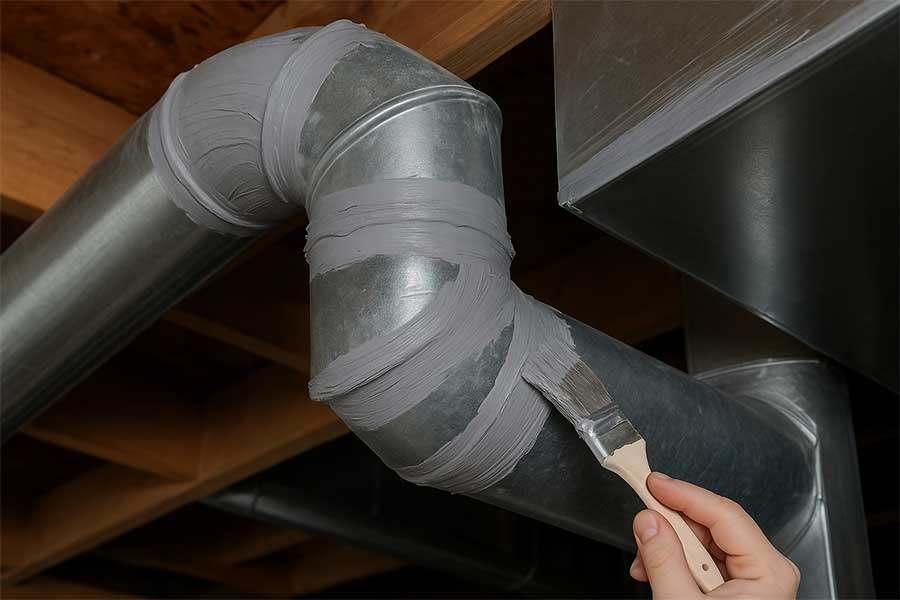
Rigid metal ductwork — usually made from stainless steel, galvanized steel, or aluminum — is the gold standard for residential HVAC systems. It’s custom fabricated to fit each home’s layout, sealed with mastic or foil tape, and built to last decades with proper care. Stainless steel offers the best durability, while galvanized steel can be prone to rust and aluminum, though effective, is more easily damaged.
Flexible, Fiberglass, and Fiberboard Ducts
Flexible ductwork is made from coiled wire covered in plastic and is typically used only where rigid metal won’t fit. It’s easier to install but tears easily and creates more air resistance that reduces system efficiency. Fiberglass duct board reduces noise but can deteriorate over time, leading to serious indoor air quality issues. Fiberboard ducts offer good insulation but collect dust and are prone to mold growth — both of which can affect the air circulating throughout your home.
How Ductwork Condition Affects Your HVAC Performance
Well-designed ductwork uses long, straight runs with minimal bends and turns to allow air to flow smoothly and efficiently. The more bends a duct system has, the more resistance the air encounters — leading to hot and cold spots, reduced comfort, and extra strain on your HVAC equipment. Working in homes throughout Blaine, we regularly find duct systems that were never designed with airflow efficiency in mind, and the impact on heating and cooling costs is significant.
Duct leaks are equally damaging. According to the U.S. Department of Energy, leaky ducts can make an HVAC system operate 20-30% less efficiently than it should, resulting in substantially higher energy bills. In older Blaine neighborhoods built in the 1970s and 80s, improperly sealed duct joints are a common find — and a common source of wasted energy year after year.
Warning Signs Your Ductwork Needs Attention
Certain symptoms point clearly to a ductwork problem that needs professional evaluation. Watch for any of the following:
- Weak airflow or uneven temperatures from room to room
- Loud whistling sounds near vents or along duct runs
- Rattling or knocking from ductwork during HVAC operation
- Unexplained spikes in heating or cooling costs
These issues don’t resolve on their own. If you’re noticing any of them in your home, it’s worth having a professional assess whether your ducts need resealing, repair, or indoor air quality solutions to address what’s circulating through them.
Protecting Your Home’s Comfort Starts with the Ductwork
Ductwork problems rarely announce themselves loudly — they tend to show up gradually as rising energy bills, uneven room temperatures, or an HVAC system that runs longer than it should. Based on what we see in Blaine properties, addressing duct issues early almost always costs less than waiting until the system is visibly struggling.
If you suspect your ducts aren’t performing the way they should, a professional inspection is the right first step. Our team at O’Boys Plumbing, Heating & Air has the experience to diagnose and resolve ductwork issues efficiently — and we serve homeowners throughout Blaine and the greater Anoka County area. Contact our team today to schedule a ductwork inspection and get a clear picture of your home’s HVAC health.
Frequently Asked Questions
What are the signs of a ductwork leak?
Weak airflow, whistling sounds near vents, hot or cold spots in specific rooms, and higher-than-normal energy bills are the most common indicators.
How long does HVAC ductwork last?
Well-maintained metal ductwork can last 25 years or more. Flexible ducts typically need replacement within 10 to 15 years.
Does ductwork need to be cleaned regularly?
Most HVAC professionals recommend duct cleaning every 3 to 5 years, or sooner if you notice dust buildup or worsening allergy symptoms.
Can leaky ducts affect indoor air quality?
Yes. Leaks can pull in dust, insulation particles, and mold spores from crawl spaces or wall cavities and circulate them throughout the home. A plumbing and HVAC inspection can identify these issues before they worsen.
How do I know if my ductwork needs repair or full replacement?
Minor leaks and loose joints can often be resealed. Widespread deterioration or severely outdated systems typically warrant full replacement. A professional inspection gives you the clearest answer.